Buying a home with a mortgage is a well-worn path. Buying vacant land is not. Many first-time land buyers in Florida find a parcel they love, call their usual mortgage lender, and learn that a standard 30-year home loan does not apply to raw land.
The good news is that land can be financed. You just need to know which options exist, what lenders look for, and how to line up your financing before you make an offer. This guide walks through how land loans work in Florida, the main alternatives, and how to choose the right path for the parcel you want.
Why land loans are different from home loans
A lender’s biggest protection is the property itself. With a house, the lender has a finished structure that is easy to value and easy to resell if the borrower stops paying. With vacant land, there is no building, comparable sales can be thin, and the land may not be buildable without permits, septic approval, or road access.
Because of that extra risk, land loans in Florida usually come with:
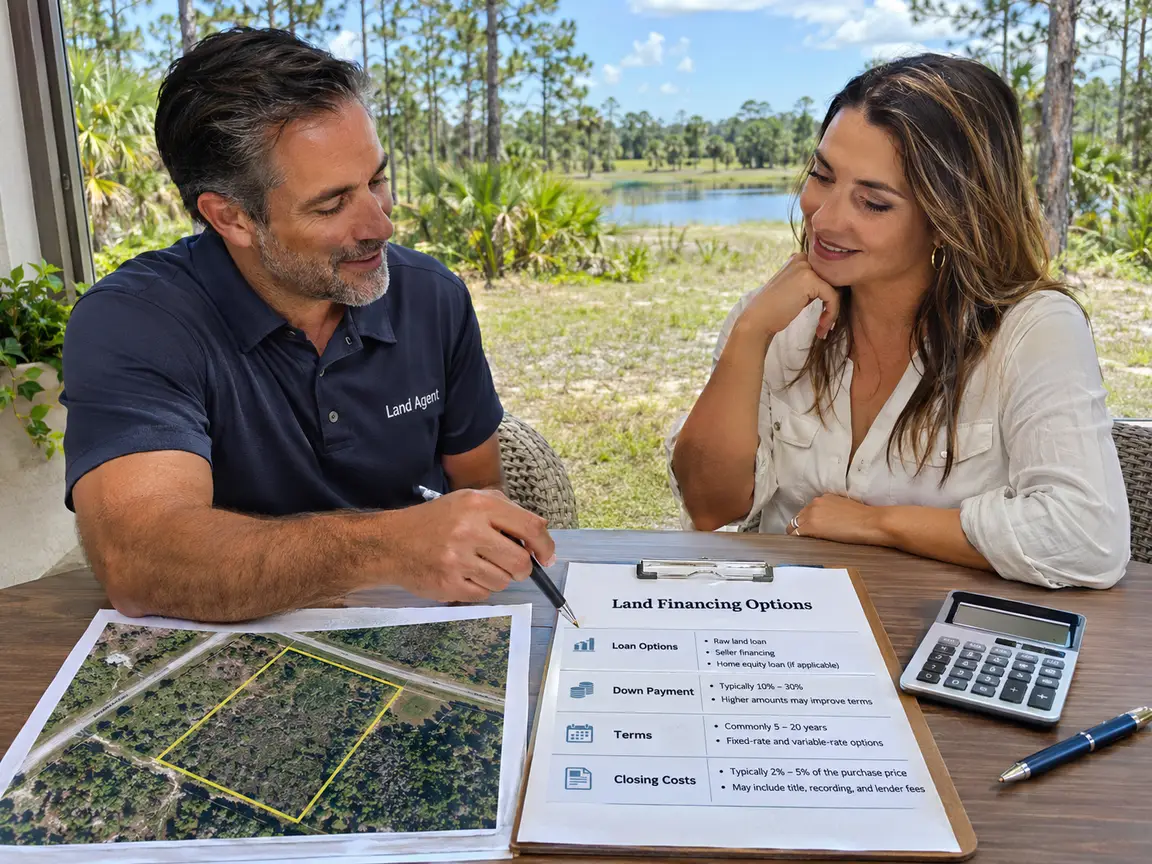
- Larger down payments. Expect roughly 20 to 50 percent down depending on the lender and the land. Some local lenders set a minimum of about 25 percent for a buildable lot, and raw, remote acreage often requires more.
- Shorter terms. Many land loans run 10 to 20 years instead of 30, and some are short-term loans with a balloon payment.
- Higher rates. Rates on land loans are typically higher than on a home mortgage, and many are adjustable.
- More questions about the land. Lenders want to know about access, zoning, utilities, flood zone, and what you plan to do with the property.
Not every parcel is financeable. A landlocked lot, a parcel that is mostly wetlands, or land in a remote subdivision with no paved roads may be hard to finance with a bank at all. That is one reason it pays to understand what to know before buying land in Florida before you fall in love with a specific lot.
The main ways to finance land in Florida
1. Land and lot loans from local banks and credit unions
Community banks and Florida credit unions are often the best place to start. They know local land values, they keep many land loans on their own books, and they are more flexible than national lenders who mostly sell their loans.
Lenders usually split land loans into two groups. Lot loans are for an improved, buildable lot in a subdivision with road access and utilities nearby, and they tend to have the best terms. Raw land loans are for undeveloped acreage with no utilities or improvements, and they carry the biggest down payments and highest rates.
Some lenders require you to start building within a set period. Others do not. Ask about this early if you plan to hold the land for a while.
2. Farm Credit lenders for rural and agricultural land
If you are buying rural acreage, pasture, timberland, or recreational land, a Farm Credit association can be a strong option. These lenders specialize in rural property and are often more comfortable with large acreage, hunting land, and agricultural use than a typical bank. Terms and down payments vary by property and purpose, so get a quote even if you are not a full-time farmer.
3. Construction-to-permanent loans
If you plan to build a home soon, a construction-to-permanent loan can roll the land purchase, the build, and the final mortgage into one loan. Funds for the build are released in draws as work passes inspection. These loans require plans, a builder, a budget, and usually proof that the lot can support a well and septic system or connect to city utilities. They take more paperwork upfront, but they can save you from paying closing costs twice.
4. Owner (seller) financing
Owner financing is common in Florida land sales, especially for smaller and more affordable lots. Instead of borrowing from a bank, you pay the seller over time under a promissory note and mortgage, or under another agreed structure.
For buyers, the advantages are flexible terms, faster closings, and fewer credit hurdles. The tradeoffs are that interest rates are often higher than a bank’s, terms may be short, and you need to make sure the deal is documented and recorded correctly. Sellers considering this route can read our guide to owner financing for Florida land.
5. Home equity and other assets
Some buyers pay for land using a home equity loan or line of credit, a cash-out refinance, or savings. This often gets you a lower rate than a land loan because the loan is secured by your home, but it also puts your home at risk if something goes wrong. Talk with a financial professional before tapping home equity for land.
6. Paying cash
Many Florida land purchases close with cash, particularly for lower-priced lots. Cash makes your offer stronger, avoids appraisal and lender delays, and lets you close quickly. Even when you pay cash, you should still get title insurance and do your due diligence.
What lenders will ask for
Being prepared speeds everything up. Most Florida land lenders will ask for:
- Proof of income, assets, and a credit check
- The purpose of the land (home site, recreation, agriculture, investment)
- The zoning and permitted uses
- A survey and an appraisal
- Details on legal access, utilities, and flood zone status
- If you plan to build: septic or sewer feasibility, plans, a budget, and a timeline
Lenders also look at how much the land is worth compared with what you are paying. Knowing Florida land prices per acre in your target county helps you set a realistic offer and avoid an appraisal shortfall.
How financing affects your offer
Your financing choice shapes your offer. A cash or pre-approved buyer looks stronger to a seller than a buyer who still needs to find a lender. If you need a loan, your vacant land purchase contract should include a financing contingency and a due diligence period long enough to get the survey, appraisal, and approvals your lender requires.
Sellers watch these terms closely. A long financing contingency can tie up their land for weeks, so a well-prepared buyer with a clear timeline often wins the deal even with a slightly lower price.
Tips to make land financing easier
- Get pre-qualified before you shop. Know your budget and down payment before you make an offer.
- Ask lenders about the specific parcel. A lender may love one lot and turn down another on the same street because of access or flood zone.
- Check access, utilities, and septic early. These are the most common reasons land deals fall through or fail to get financed.
- Compare at least two or three lenders. Terms on land loans vary more than on home loans.
- Ask the seller about owner financing. Some listings advertise it; others will consider it if asked.
- Work with a land-savvy agent. A buyer’s agent for land can point you to lenders who actually finance land in that county and help you structure an offer sellers will accept.
The bottom line
Financing Florida land takes more planning than financing a home, but it is very doable. Start by matching the type of land you want with the right kind of lender, line up your down payment, and confirm the parcel is financeable before you commit. With the right preparation, you can buy the land you want on terms that fit your plans.
If you are looking for land in Florida, or you own land and want to know how buyer financing affects your sale, contact Scott. As a licensed Florida land specialist, Scott can help you find the right property, connect with lenders who understand land, and put together an offer that gets accepted.
