
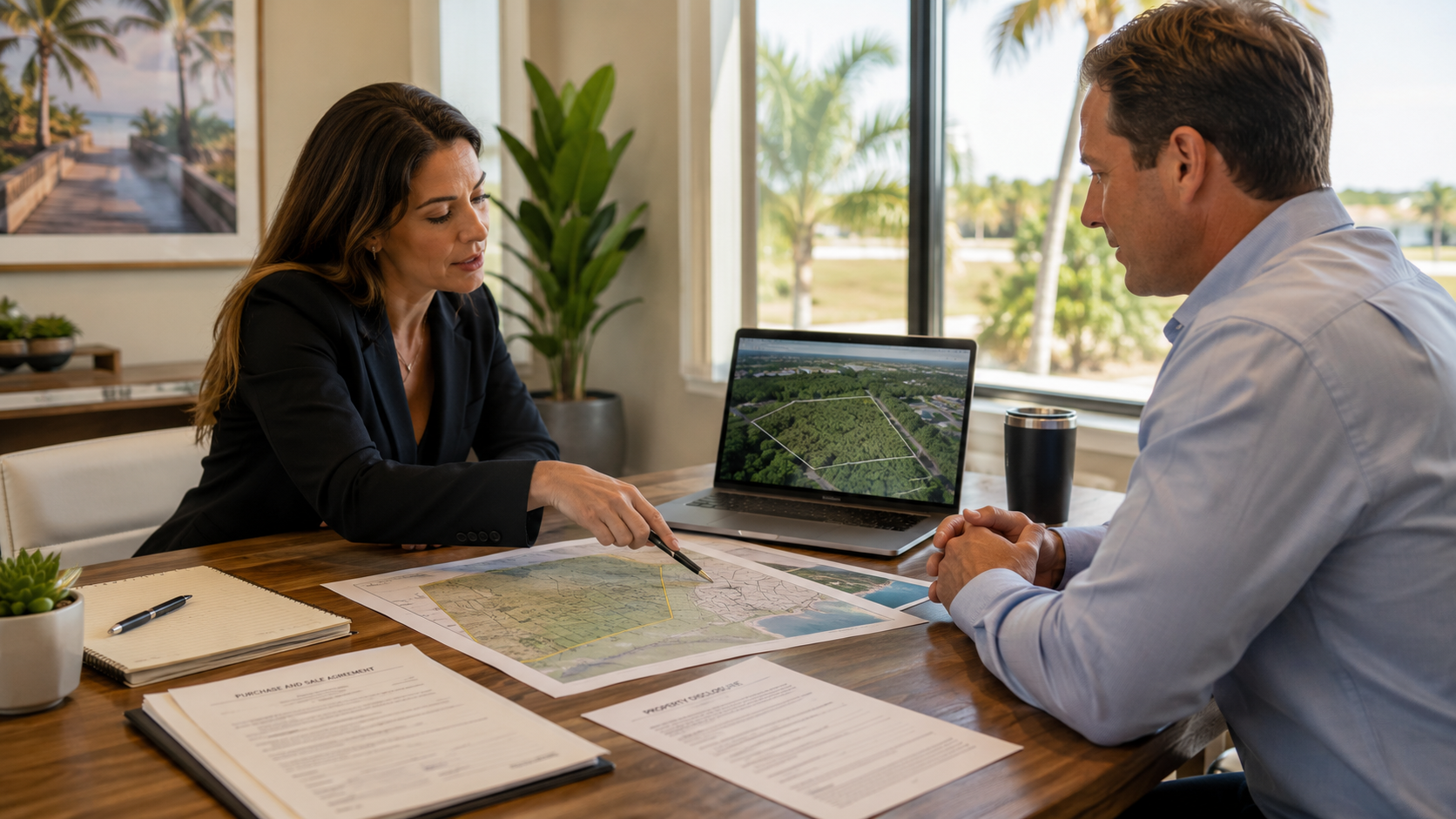
Buying a house, most people wouldn’t dream of skipping a buyer’s agent. When it comes to buying land, a lot of people do — and a surprising number of them regret it. Vacant land doesn’t come with a home inspection, a standardized disclosure form, or a neighbor who can tell you why the last three people who tried to build there gave up. If you’re shopping for land in Florida, the question isn’t really “can I do this myself.” It’s whether doing it yourself is worth what you might miss.
Here’s what a land buyer’s agent actually does, what it costs you in 2026, and how to tell whether you need one for the property you have in mind.
Buying Land Is a Different Kind of Transaction
Residential real estate has a well-worn process. Land does not. Every vacant parcel is its own small research project: what can legally be built on it, whether it has real access to a public road, whether utilities reach the property line or stop a half-mile short, and whether the boundary on the plat map matches what’s actually fenced or cleared on the ground.
None of that shows up in a listing photo. A buyer’s agent who specializes in land knows which of those questions to ask before you’re under contract, not after.
What a Land Buyer’s Agent Actually Does
Finds properties you won’t find on your own
A meaningful share of raw land trades hand-to-hand, through word of mouth, probate sales, or small local listings that never make it to the major portals. An agent who works land in your target county often knows about parcels before they’re broadly marketed, and can also flag red flags on public listings — a suspiciously low price per acre, a lot that’s been sitting for two years, a parcel platted decades ago under rules that no longer apply.
Runs the due diligence you’d otherwise have to learn from scratch
This is where a land specialist earns their fee. Before you make an offer, a good buyer’s agent will help you check:
- Zoning and future land use designation, and whether it matches what you plan to do with the property
- Legal access — is there a recorded easement, or does the parcel technically touch a road that isn’t maintained
- Wetlands, flood zone status, and any environmental restrictions that limit where you can build
- Utility availability — well and septic feasibility, or distance to existing water and power lines
- Whether the property has back taxes, liens, or an open code enforcement case attached to it
Skipping any one of these is how buyers end up owning a lot they can’t legally build on, or discovering a $40,000 septic and fill-dirt bill after closing.
Negotiates price and terms
Land doesn’t have the comp density that houses do. Two five-acre parcels a mile apart can be priced completely differently for reasons that aren’t obvious from a listing — one has cleared, buildable high ground, the other is mostly wetland. An agent who prices land regularly can tell you whether an asking price is fair, and can negotiate on your behalf using actual comparable sales rather than guesswork.
A Quick Example of How This Plays Out
Say you find a 5-acre parcel outside Ocala listed at a price that looks great compared to everything else nearby. No agent, no problem — you make an offer, it’s accepted, and you head to closing.
Three months later, you call a contractor to talk about a driveway and well, and find out the recorded access easement on the property was never actually improved, so there’s no legal path to the road without negotiating with a neighbor. Or you discover the back third of the parcel is designated wetland and unbuildable, which is why the “great price” was actually priced correctly for a 3-acre buildable footprint, not five.
A land buyer’s agent would have pulled the plat, checked the easement language, and cross-referenced the flood and wetland maps before you ever wrote an offer — the kind of research that takes an experienced agent an afternoon and would take a first-time land buyer a lot of trial and error to even know to look for.
What Does It Cost You to Use One?
This is the part that’s changed. Following the 2024 National Association of Realtors settlement, buyer’s agent compensation is no longer something that’s assumed or bundled invisibly into the transaction — buyers now typically sign a written buyer agency agreement up front that spells out how their agent gets paid. In many Florida land deals, that compensation is still paid by the seller as part of the listing agreement, but it isn’t automatic anymore, and it’s worth understanding before you start touring properties. For a full breakdown of how commissions work under the current rules, see our guide on how buyer’s agent commissions work in 2026.
The short version: in most cases, using a buyer’s agent doesn’t add cost on top of the purchase price — you’re simply formalizing who represents your interests and how they’re compensated, instead of going it alone with no representation at all.
It’s also worth asking early in the process whether your prospective agent is comfortable negotiating that compensation directly with the listing side, and getting it in writing before you tour properties together. A buyer’s agent who can’t clearly explain their own fee structure in plain language is unlikely to explain a wetlands determination or an easement dispute any more clearly.
When You Might Not Need One
There are situations where skipping a dedicated buyer’s agent is reasonable:
- You’re buying a small, low-cost lot in a platted subdivision with clear utilities and no access questions
- You already work in land development, surveying, or title, and can run your own due diligence
- You’re buying directly from a seller you already know and trust, with a title company handling closing
Even in those cases, at minimum, have a real estate attorney or title company review the contract and confirm clean title before you close.
How to Choose the Right Land Buyer’s Agent
Not every licensed agent works land regularly. Ask a prospective agent:
- How many vacant land transactions have you closed in the last 12 months, in this county specifically
- Can you walk me through how you’d verify access and utilities on a specific parcel I’m considering
- Do you have relationships with local surveyors, title companies, and septic/well contractors you can refer me to
If the answers are vague, that’s a sign the agent is more comfortable with houses than raw acreage. Before you start touring parcels, it’s also worth reading our guide on what to know before buying land in Florida, so you’re asking the right questions from the first showing.
Bottom Line
Land is more forgiving on price than it is on due diligence. The mistakes that cost buyers real money — unbuildable lots, phantom access, surprise liens — are almost always the ones a land specialist would have caught before you signed anything. If you’re actively shopping for acreage in Florida, browse our current listings or reach out and we’ll walk you through what representation looks like for the specific property you have in mind.
Ready to talk through a property you’re considering? Contact us, and we’ll help you figure out what questions to ask before you make an offer.
