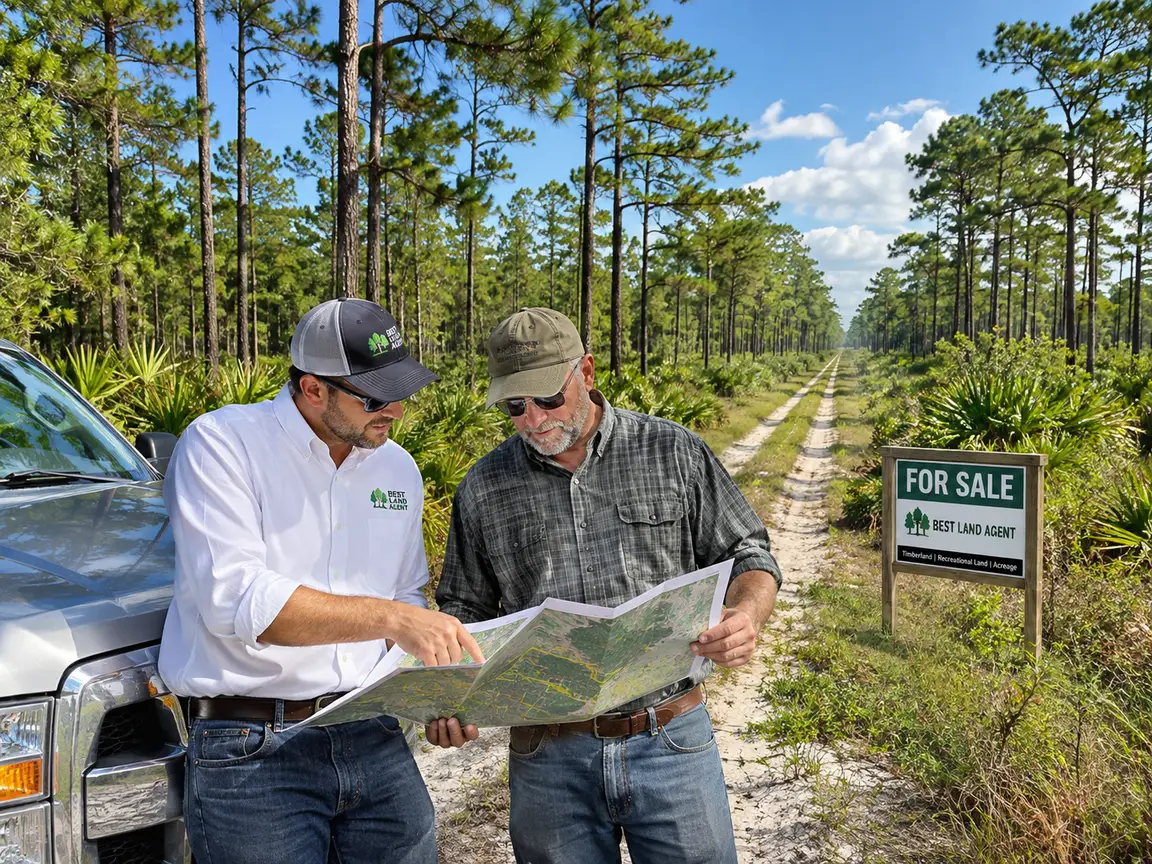
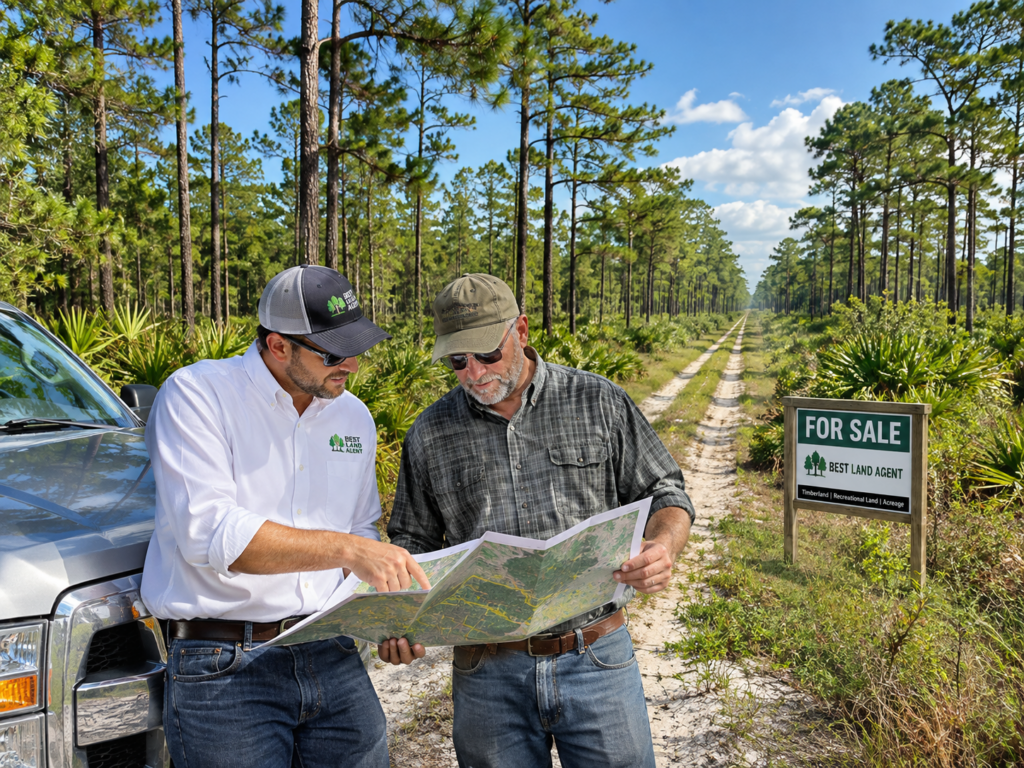
Selling a 5-acre homesite and selling 200 acres of planted pine are two very different jobs. Large tracts in Florida, whether they are timberland, pasture, row-crop farms, or mixed-use rural acreage, draw a smaller and more specialized pool of buyers. The value is spread across more than just the dirt: standing timber, agricultural classification, hunting and recreational appeal, road frontage, and future development potential all play a part.
This guide walks through what makes large-acreage sales different, how timber affects your price, and what to look for in an agent before you list.
Why Large Tracts Sell Differently
Most residential lots sell on location and price per acre. Large rural tracts sell on a combination of factors that buyers weigh very differently depending on who they are.
A timber investor looks at merchantable volume, growth, and road access for log trucks. A hunter or outdoor buyer looks at cover, water, wildlife, and privacy. A farmer looks at soils, irrigation, and fencing. A developer looks at zoning, utilities, and how close the property sits to growing towns. The same tract can be worth noticeably different amounts to each of these buyers, and part of an agent’s job is figuring out which buyer will pay the most and marketing straight to them.
Large tracts also take longer to sell. There are fewer buyers who can write a check for a few hundred acres, financing is more involved, and buyers often want weeks of due diligence before they commit. Planning for a longer timeline up front keeps you from cutting your price too early.
What Kind of Buyer Is Your Land Best Suited For?
Before you set a price, think about which buyer group your tract fits best:
- Timber and investment buyers want well-stocked stands, good access, and a predictable harvest schedule.
- Recreational buyers are often willing to pay more per acre for smaller pieces with good hunting, water features, or a cabin site. Our post on recreational land buyers covers what they look for.
- Agricultural buyers focus on soil quality, cleared acreage, wells, and existing fencing and barns.
- Developers and builders care about zoning, density, utilities, and road frontage, and they usually pay the most when the land sits in a growth path.
- Conservation buyers, including land trusts and public agencies, sometimes buy land or conservation easements on tracts with strong environmental value.
Sometimes the best result comes from dividing the property. A large tract with road frontage on one side and deep woods on the other might bring more as two or three parcels sold to different buyers than as one piece. Splitting land has costs, including surveys, county approvals, and sometimes new access easements, so run the numbers with your agent before you decide.
How Standing Timber Affects Your Sale Price
If your land has planted pine or mature hardwoods, the timber is an asset with its own value, separate from the land. Many sellers either overlook it or assume it is worth more than it is.
Get a Timber Cruise
A timber cruise is an inventory done by a professional forester. It estimates the volume of pulpwood, chip-n-saw, and sawtimber on the property and puts a market value on it. For any tract with meaningful timber, a cruise gives you real numbers to price from and gives buyers confidence. The University of Florida’s Florida Land Steward program publishes a quarterly timber price update that is a useful reference, but stumpage prices vary by region, product, and access, so a forester’s on-site estimate is what matters for your tract.
Know the Market for Your Products
Timber markets in the Southeast have been uneven in recent years. Pine pulpwood prices in particular have been weak in many areas, while sawtimber has held up better. That means a stand of young pine may add less to your price than you expect, while a mature stand close to a sawmill can add a lot. Your forester can tell you whether it makes sense to sell the timber and land together or to harvest first.
Sell Together or Harvest First?
There are three common approaches:
- Sell the land with the timber standing. This is simplest, and buyers who want a timber investment may pay well for a good stand.
- Harvest first, then sell the land. This can make sense when timber is mature and markets are strong, but cutover land usually shows worse and may sell for less per acre.
- Sell with a timber reservation. You sell the land but keep the right to harvest for a set period. It can work, but it narrows your buyer pool and needs careful contract language.
Timber sale income can also be taxed differently from other income. Timber held for more than a year generally qualifies for long-term capital gains treatment, and you may be able to deduct your timber basis. Talk with a CPA who works with forest landowners before you sell.
Agricultural Classification and Property Taxes
Many large Florida tracts carry agricultural classification, often called the greenbelt, which taxes the land based on its agricultural use rather than its market value. For timberland, that use is usually a bona fide commercial timber operation, often backed by a forest management plan.
When you sell, the classification does not automatically carry over. In most counties the new owner has to apply in their own name, and the property appraiser will review whether the land is still being used for a bona fide agricultural purpose. Buyers who plan to keep the land in timber or cattle will want to know the current tax bill and what records you can hand over. Our guide to Florida agricultural classification explains how it works for sellers.
Pricing Large Acreage the Right Way
Pricing a large tract is harder than pricing a lot in a subdivision because there are fewer recent sales to compare. A good pricing approach looks at:
- Comparable rural sales of similar size and use in your county and neighboring counties.
- Timber value from a recent cruise.
- Improvements like wells, barns, fencing, food plots, ponds, and interior roads.
- Access and frontage, since paved road frontage and deeded access can make a big difference.
- Wetlands and floodplain, which can reduce usable acreage.
- Highest and best use, especially if part of the property could support homesites or future development.
Overpricing a large tract is costly. Because the buyer pool is small, a listing that sits for months gets stale quickly. For a deeper walkthrough, see our post on how to price Florida land.
Prepare Your Tract for the Market
A little preparation goes a long way with rural buyers:
- Clear and mark your boundaries. Buyers want to walk the corners and see where the property starts and ends.
- Open up interior roads and trails so buyers can see the whole tract.
- Gather your documents: the deed, any surveys, timber cruise and management plan, ag classification records, hunting or grazing leases, and any easements.
- Review existing leases. Hunting, grazing, and cell tower leases can add value, but buyers need to know the terms and whether they can end them.
- Take good photos and aerial images. For large acreage, drone video and a clear boundary map often do more than a dozen ground photos.
What to Look for in an Agent for Timberland or Large Acreage
Not every real estate agent is set up to sell a large rural tract. When you interview agents, ask:
- How many land and acreage sales have you closed? Experience with homes does not translate directly to timberland or farms.
- Do you work with foresters, surveyors, and land-use attorneys? A good land agent will have a network ready.
- How will you market to the right buyers? Look for land-specific listing sites, investor and hunting audiences, and outreach to adjacent landowners, who are often the best buyers.
- Can you explain the value drivers on my property? They should be able to talk through timber, ag classification, access, and highest and best use without guessing.
If you are not sure whether you need a land broker or a land agent, our post on land broker vs. land agent explains the difference.
Expect a Longer, More Detailed Closing
Large-acreage deals usually include longer due diligence periods. Buyers may order a new survey, an environmental review, a timber cruise of their own, and title work on several older deeds. Farm Credit and other lenders that finance rural land have their own appraisal and documentation requirements. A well-organized seller with records ready can shorten this process by weeks.
Ready to Sell Your Florida Acreage?
Timberland, farms, and large rural tracts reward sellers who take the time to understand what they have and who the right buyer is. With the right preparation and an agent who knows rural land, you can avoid leaving money on the table.
If you’re thinking about selling timberland or a large tract anywhere in Florida, contact Scott at Best Land Agent for a no-pressure conversation about your property, its value, and the best way to bring it to market.
