
Florida’s Agricultural Classification: What Land Sellers Need to Know in 2026
Every year, a Florida land seller lists a parcel, gets an offer, and then discovers something unpleasant during due diligence: the property’s tax bill is about to change dramatically, and it has nothing to do with the sale price. The culprit is usually the same thing — an agricultural classification, commonly called the Greenbelt exemption, that doesn’t automatically follow the land to its new owner.
If you own raw land in Florida and you’re thinking about selling, understanding how this classification works isn’t optional. It affects your carrying costs while you own the property, how you should market it, and what your buyer can expect to pay in taxes the year after closing.
What the Greenbelt Law Actually Does
Florida’s Greenbelt Law, codified at Section 193.461 of the Florida Statutes, lets qualifying land be assessed at its agricultural value instead of its market value for property tax purposes. The difference is significant: agricultural classification can reduce a parcel’s assessed value by roughly 70 to 85 percent compared to what the same land would be assessed at without it.
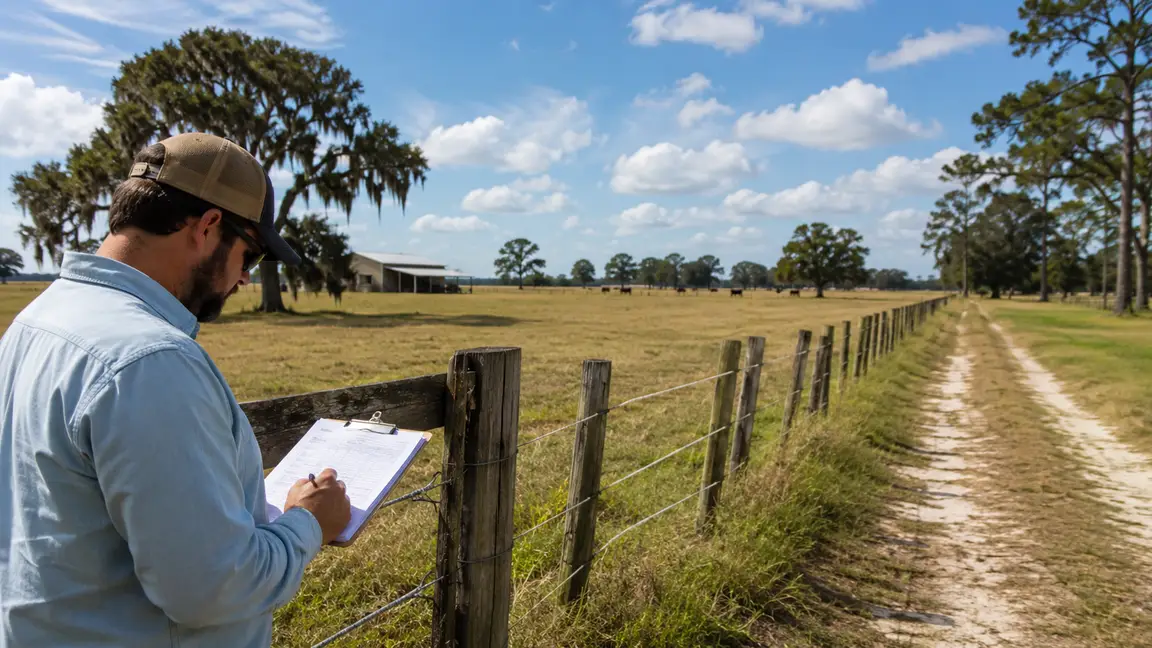
Qualifying uses aren’t limited to large-scale farming operations. Cattle grazing, hay production, timber management, and even beekeeping can all support an agricultural classification, provided the use is “bona fide” — meaning it’s a genuine, ongoing agricultural operation and not just land sitting idle with a few cows parked on it before a tax deadline.
For an owner who’s been sitting on a parcel for years, this exemption can be the difference between a manageable annual tax bill and one that eats into any profit from an eventual sale.
Why This Matters the Moment You List Your Land
Here’s the part that catches sellers off guard: agricultural classification does not transfer with the deed. Any change in ownership requires the new owner to file their own application with the county property appraiser for the following tax year. Your buyer inherits the land — they don’t inherit your exemption.
That has a few practical consequences worth understanding before you sign a listing agreement.
First, your buyer’s first full tax bill after closing could look very different from the bill you’ve been paying, especially if they don’t continue the agricultural use or don’t file in time. That’s not something you’re obligated to fix, but it’s exactly the kind of surprise that derails a deal in the final stretch or generates an angry phone call six months after closing. Better to address it upfront than let a buyer find out at the worst possible moment.
Second, the timing rules are strict. The application deadline for agricultural classification is March 1st of the year being applied for, but the property appraiser will look at whether the qualifying use was actually in place as of January 1st of that year. If your closing happens mid-year and the agricultural activity lapses in the gap, your buyer may miss a full year of the exemption even if they intend to keep the land in agricultural use long-term.
Third, county property appraisers don’t take an owner’s word for it. Applicants typically need to show documentation — receipts for supplies, veterinary records, livestock sale receipts, IRS Schedule F filings, or a written business plan for the operation. If you’ve been maintaining the classification yourself, gathering this paperwork now, before you list, makes the property meaningfully easier to sell to a buyer who wants to keep the exemption going.
What to Do Before You List
A few practical steps make this a selling point instead of a liability:
Confirm your parcel’s current classification status with the county property appraiser’s office and get a copy of the most recent determination. Don’t assume — verify.
Pull together whatever documentation supported your classification, even if you’re not required to hand it over. A buyer weighing whether to continue the agricultural use will move faster and pay more confidently if they can see exactly what qualified the land in the past.
Think about timing relative to the January 1st and March 1st dates. If you can structure your closing so the agricultural use isn’t interrupted, or so your buyer has a real shot at filing on time, that’s worth mentioning in your listing and worth discussing with your agent.
Decide how you want to disclose the exemption situation. Being upfront that the classification won’t automatically transfer — and giving the buyer a clear picture of what their taxes could look like without it — builds trust and heads off disputes after closing.
The Marketing Angle Most Sellers Miss
Here’s the part that’s easy to overlook: an active agricultural classification isn’t just a tax detail, it’s a selling point. Buyers who are looking at raw land as an investment, a future homestead, or a recreational property often care a great deal about ongoing carrying costs. A parcel with a documented path to a Greenbelt exemption is more attractive than a comparable lot where the buyer would be starting from zero, with no history and no paperwork to build a case from.
Sellers sometimes assume that discussing property taxes will scare off buyers. In practice, the opposite is usually true. Buyers appreciate transparency, and a clear explanation of how the exemption works — including the fact that they’ll need to file their own application — reads as competence, not a red flag.
A Real-World Example
Picture a 20-acre parcel in a rural Florida county, currently classified agricultural because the owner leases it to a neighbor for cattle grazing. Under that classification, the annual tax bill might run a few hundred dollars. Without it, assessed at full market value, the same parcel could owe several thousand dollars a year.
If that owner sells to a buyer who has no interest in continuing the grazing lease — say, someone planning to hold the land for future development — the buyer’s tax bill could jump dramatically the following year, catching them off guard if nobody flagged it during the sale. Worse, if the sale closes in, say, April, and the grazing lease ends at closing, the land may sit without a qualifying use through the following January 1st, which means even a buyer who wants to keep the classification could lose a full year of eligibility simply because of bad timing.
None of this makes the parcel unsellable. It just means the numbers a buyer sees in their offer need to account for what their actual carrying costs will look like, not just what the seller has been paying. Sellers who get ahead of this conversation close faster and field fewer post-closing complaints.
Frequently Asked Questions
Does agricultural classification automatically end when I sell?
Yes, functionally. The classification is tied to the use of the land and the owner’s application, not the parcel itself. A change in ownership requires the new owner to file a fresh application for the following tax year, and the county will evaluate the property based on the buyer’s plans and use, not the seller’s history.
Can I keep the exemption active right up until closing to help my buyer?
In many cases, yes — if the qualifying agricultural use (a grazing lease, a timber management plan, etc.) continues through the sale, that can support a stronger case for the new owner’s application, especially if closing happens before the January 1st cutoff for the following tax year.
Should I mention this in my listing?
Generally, yes. Buyers who understand the classification and what it takes to maintain it are less likely to be blindsided later, and a well-documented history of qualifying use is a genuine selling point, not just a disclosure obligation.
What if my land was never agriculturally classified?
That’s fine — plenty of raw land in Florida sells without it. But if your parcel could plausibly qualify (based on size, use, or lease potential), it may be worth exploring before you list, since it can meaningfully change how the property is priced and marketed.
A Detail Worth Getting Right
None of this is exotic information, but it’s exactly the kind of detail that’s easy to miss if you’re selling land yourself or working with an agent who mostly handles residential homes. Land carries its own set of tax and zoning quirks, and the Greenbelt classification is one of the more consequential ones in Florida.
If you’re weighing whether to list your land and want a clear read on how its current classification affects both your asking price and your buyer pool, compare your selling options or reach out to us to talk through your property’s situation. You can also get a free land valuation to see where your parcel stands before you list.
