
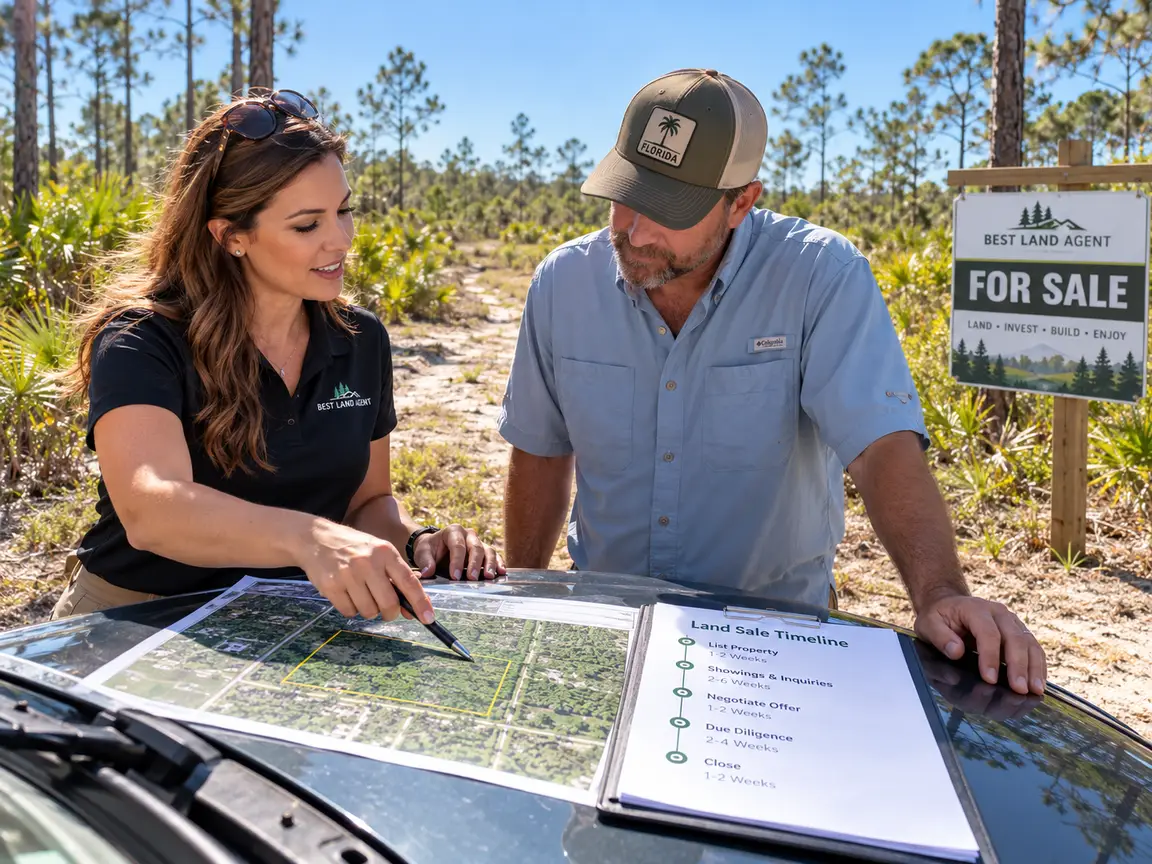
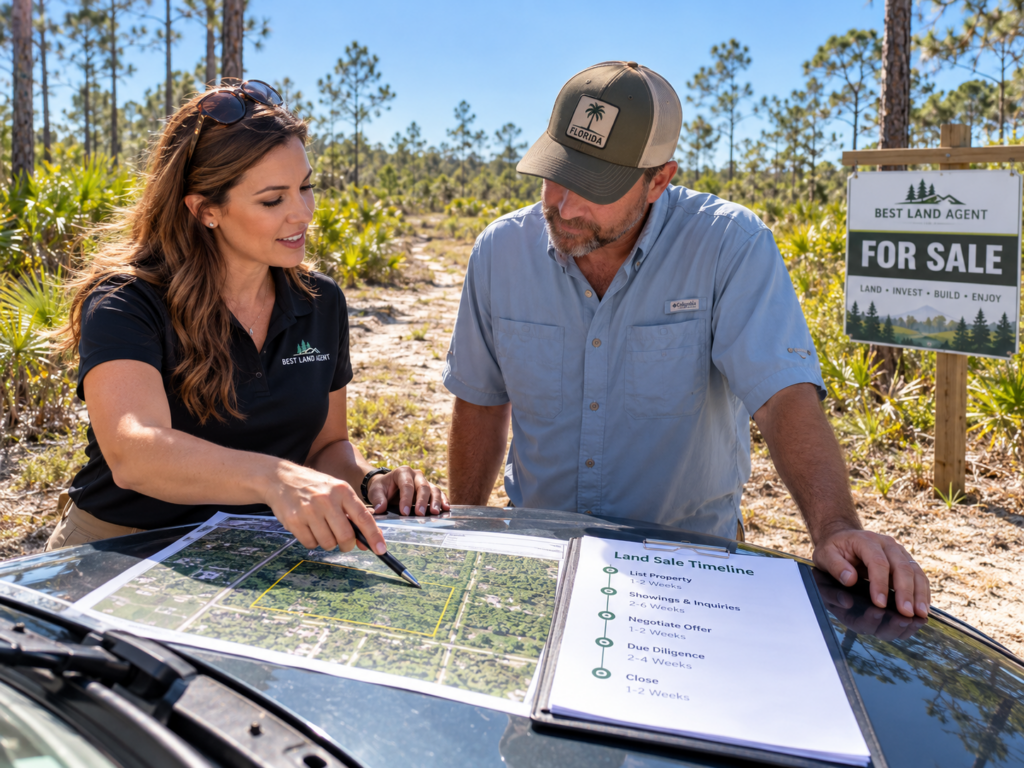
If you are thinking about selling land in Florida, one of the first questions you probably have is simple: how long will it take? The honest answer is that it depends. A well-priced, easy-to-understand parcel in a county with active buyers can go under contract in weeks. A parcel with access questions, an unrealistic price, or a thin buyer pool can sit for many months.
What is useful is understanding what actually drives the timeline, so you can control the pieces you can and plan around the ones you cannot. This guide breaks the process into stages, explains what slows land sales down, and shows how to shorten the road to closing.
Why land does not sell on a house timeline
Homes are bought by people who need a place to live, and many buyers shop on a schedule. Land buyers are a more varied group: builders, investors, families planning a future home, hunters and recreational buyers, and people buying acreage as a long-term hold. Many are not in a hurry, and most do real homework before they commit.
Vacant land also comes with questions a house does not. Is there legal access? Are utilities nearby? Is there a well or septic option? Is any of it in a flood zone or wetland? What can be built under current zoning? Buyers want answers before they make an offer, and every unanswered question adds time.
That is why a land sale often feels slower than a home sale, even in a healthy market. It is usually not that nobody wants the property. It is that the right buyer needs the right information.
The four stages of a Florida land sale
Stage 1: Preparing to list
This stage is almost entirely in your control, and it is where many sellers save or lose weeks. Gather your deed, a recent survey if you have one, tax information, any HOA or deed restrictions, and what you know about access and utilities. Confirm that the parcel number, acreage, and legal description all match.
If there are title questions, such as an unpaid lien, an heir who has not signed, or an old easement, deal with them early. Our guide to preparing your listing before it goes live walks through what to have ready. A seller who is prepared on day one is a seller who closes sooner.
Stage 2: Pricing and marketing
Price is the single biggest lever on how long your land sits. A parcel priced in line with recent comparable sales draws showings and offers early, when a new listing gets the most attention. A parcel priced well above the market tends to sit, then sell for less after price reductions and stale exposure.
Land comps are harder to find than home comps, because no two parcels are identical. Size, road frontage, access, location, and utilities all change value. We cover the approach in detail in our piece on pricing your land realistically. Once you are priced, good marketing means clear photos, an accurate map or boundary, and a listing description that answers the questions buyers will ask before they have to ask them.
Stage 3: Showings, offers, and negotiation
Once your land is live, the pace depends on the buyer pool for your type of parcel. A small residential lot in a growing community will often attract different buyers than a large recreational tract. Expect some buyers to visit the property, check the county for zoning and permitting questions, and ask for time to review.
When an offer arrives, the timeline is partly in how quickly you and your agent respond. Slow replies cost momentum, and momentum matters. A good offer is not just the highest price. Financing type, deposit, due diligence period, and closing date all affect your real result.
Stage 4: Contract to closing
After you accept an offer, a typical land contract includes a due diligence or inspection period, time for title work, and a closing date. Cash buyers can close quickly. Buyers using land loans or other financing usually need more time, because lenders often look hard at land. Owner financing can be a path to a sale when a conventional loan is hard to get, but it comes with its own considerations.
Surprises at this stage, such as a survey that shows a boundary problem or a title search that turns up a lien, are the most common reason that a closing drifts. This is another reason to do your homework before you list.
What slows a Florida land sale down
Most delayed land sales share a handful of causes:
- An overly optimistic price. The most common reason, and the easiest to fix.
- Unclear or no legal access. Landlocked or unclear-access parcels shrink the buyer pool quickly.
- Title or ownership issues. Liens, unresolved estates, or missing signatures can stop a closing cold.
- Flood zone, wetlands, or septic limits. These are not deal-killers, but buyers need honest information up front.
- Limited marketing. If the right buyers never see the listing, it will not matter how good the parcel is.
- Slow responses. Days lost to unanswered calls, missing documents, or delayed signatures add up.
How to shorten your timeline
You cannot control the market, but you can control a lot of what happens to your listing.
Price for the market you are in, not the one you remember. Look at recent sales of similar parcels in your county, not the asking prices of listings that have been sitting.
Get your paperwork in order before the first showing. A current survey, clear tax information, and answers on access and utilities can turn a curious buyer into a committed one.
Use an agent who sells land every day. A land specialist knows which buyers are active in your county, how to present a parcel, and how to read an offer. Read more about the step-by-step process so you know what to expect at each stage.
Be responsive. Answer questions quickly and keep documents ready for the title company. Buyers notice, and so do their lenders.
Be realistic about what speed costs. If you need to close in a matter of weeks, you may need to accept a lower price or a different kind of buyer. If you are weighing speed against price, it helps to compare your options side by side before deciding.
So, how long should you plan for?
Because every parcel and county is different, any single number would be a guess. A better way to plan is to think in ranges and in stages. Preparing to list can take days or weeks, depending on your paperwork. Marketing and negotiating can take anywhere from a few weeks to many months, mostly depending on price, location, and parcel type. Contract to closing is often a matter of weeks, longer if financing or title issues are involved.
If your timeline is firm, tell your agent at the start. It changes how your land should be priced and marketed, and a good agent will be upfront about the tradeoffs.
Ready to find out what your land could do?
Selling land does not have to be a guessing game. If you want a realistic read on value, timing, and the best way to sell your specific parcel, you can list your land with a licensed agent who handles Florida land every day, or contact Scott for an honest conversation about your options.
