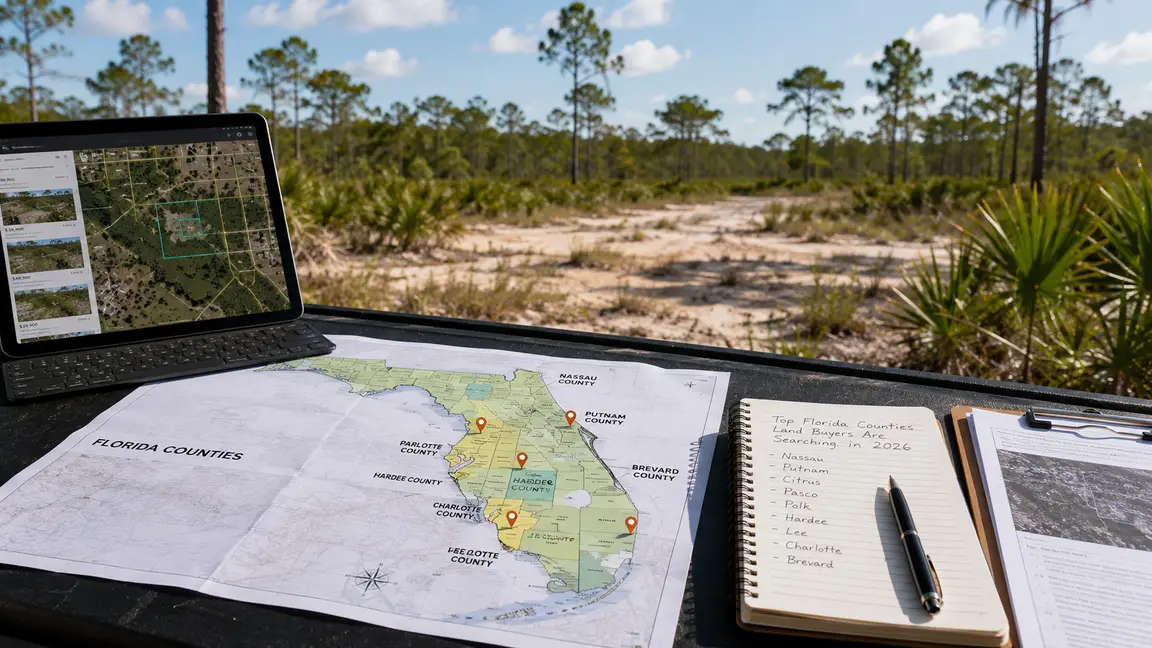
Not all Florida land is competing for the same buyer. A half-acre lot outside North Port is selling to a very different person than a wooded 1.14-acre parcel in the Panhandle near Compass Lake, and both are selling to a different buyer than a 1-acre homesite in rural Highlands County. If you’re shopping for land, or getting ready to list it, knowing which counties are pulling the most buyer attention in 2026 — and why — will save you time either way.
Why Buyer Demand Varies So Much by County
Florida land isn’t one market. It’s dozens of smaller, overlapping markets shaped by proximity to growth corridors, water, recreation, and how easy the land is to actually use. A parcel with cleared, dry, accessible acreage and a clear entry point will draw faster interest than a landlocked lot with drainage issues, even in the same county.
That variation shows up clearly in what buyers are actually searching for. Search interest right now includes specific communities like North Port, Fort McCoy, Flagler Estates, and Sunny Hills — not just “land for sale Florida” in general. Buyers already know, at least loosely, where they want to be. The question is whether they can find the right property once they get there.
What’s Fueling Demand in 2026
Two forces are shaping Florida land demand this year.
The first is population growth. Florida was ranked the #2 growth state in the country in 2025, and forecasts have it adding roughly 300,000 new residents a year through 2030. A meaningful share of that growth is retirees and remote workers who want land, not just a house — room for a workshop, a garden, horses, or simply distance from neighbors.
The second is a genuine recreational land boom. Buyers are shopping for hunting acreage, ATV-ready parcels, and land with established tree cover or water access, and they’re increasingly favoring land that’s usable year-round rather than for one season only. Quality acreage with those features is limited, which is pushing competitive interest into counties that still have it at a reasonable price.
Where the Demand Is Concentrated
North Port and the Gulf Coast Corridor (Sarasota / Charlotte Counties)
This corridor keeps showing up in land searches for a simple reason: growth. North Port and Port Charlotte sit inside one of Florida’s fastest-expanding metro footprints, with paved-road residential lots offering a lower-cost entry point into an area where home prices have climbed well past what raw land still costs. Buyers here tend to be planning to build within a few years, not just holding for appreciation.
Fort McCoy and Marion County
Fort McCoy sits near the Ocala National Forest, and that proximity is doing a lot of the selling. Buyers searching this area want acreage, trees, and quiet — corner lots and larger tracts that support a rural or semi-rural lifestyle, plus easy access to one of the largest public recreation areas in the state. Marion County’s horse-country reputation also pulls in buyers specifically looking for land that can support animals.
Flagler Estates
Flagler Estates draws a buyer who wants affordability and space more than proximity to a specific city. It’s a recurring search term because inventory here tends to be larger, cheaper parcels — appealing to buyers priced out of coastal counties but not willing to give up acreage.
Sunny Hills (Washington County, Panhandle)
Sunny Hills and the broader Compass Lake / Alford area represent the Panhandle side of demand — wooded lots at a lower price point than peninsula Florida, popular with buyers who want a recreational property or an eventual retirement lot and don’t need to be near a major metro.
Highlands County
Rural homesites in areas like Venus draw buyers focused on larger acreage, owner financing, and a slower pace of life — often people relocating from out of state who want land first and will build later.
What This Means If You’re Selling
If your land sits in or near one of these areas, that’s a real advantage — buyers are already searching for your county by name. But demand by search term doesn’t automatically mean demand for your specific parcel. Pricing still needs to reflect your lot’s access, utilities, and usability, not just the county’s overall reputation. A free land valuation is the fastest way to see how your property compares to what’s actually selling nearby before you set a price.
What This Means If You’re Buying
Searching by community name is a good instinct, but it can also cause you to miss comparable land one county over that fits your budget or goals just as well. Working with an agent who tracks these micro-markets — not just statewide averages — means you’ll hear about matching parcels before they’re widely marketed, and you’ll have someone who can tell you honestly whether a lot’s price reflects real demand or just an optimistic listing.
Get Local Guidance Before You Buy or Sell
Florida land demand isn’t evenly spread, and chasing the wrong county — or underpricing in a hot one — costs real money either way. If you’re trying to figure out where to buy, or what your land in one of these areas is actually worth right now, reach out to our team for a straight answer based on current local activity, not guesswork.
