
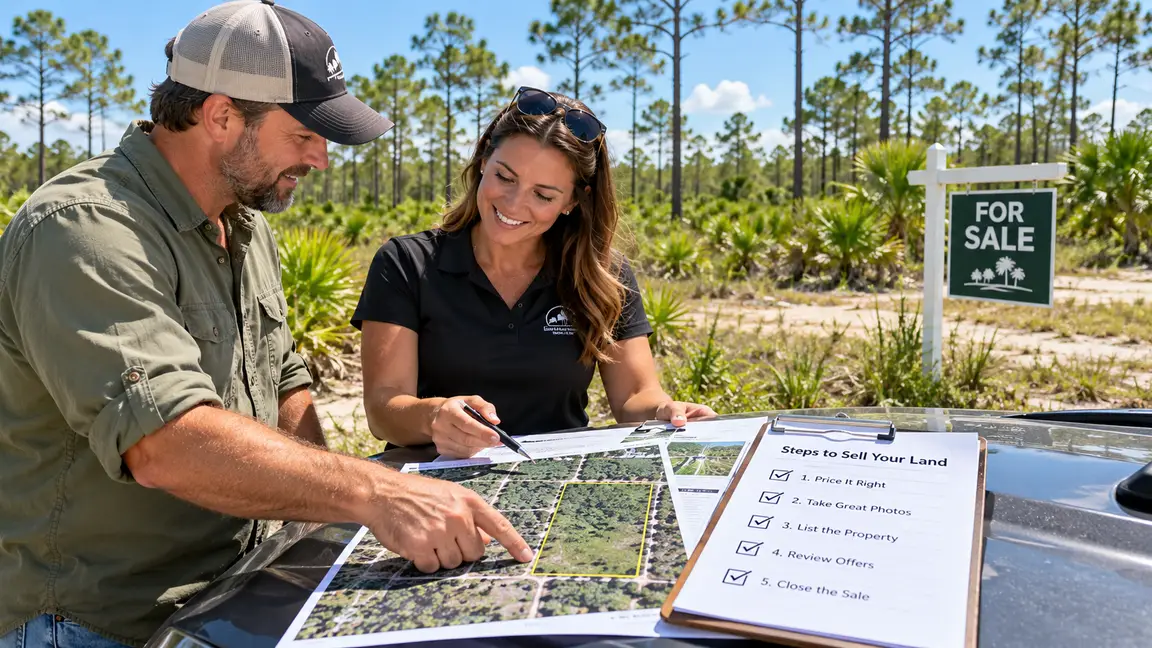
Updated for 2026. Selling vacant land in Florida is not the same as selling a house. There are rarely tidy comparable sales; buyers care about access, utilities, flood zone, and what the zoning allows, and the right pricing strategy can differ a lot from county to county. This guide walks through the full process, from deciding whether to hire an agent to the closing table.
Decide to Use a Real Estate Agent
The first major decision for a landowner is whether to enlist the services of a real estate agent. Agents bring expertise in market trends, pricing strategies, and negotiation skills. They can also handle marketing and the legal intricacies of land sales. However, using an agent also means paying a commission, typically a percentage of the sale price paid at closing (meaning no upfront fees). Landowners who prefer direct control over the selling process and wish to avoid commission fees may choose to sell the land themselves. This option, often referred to as For Sale By Owner (FSBO), requires more hands-on involvement in every aspect of the sale and may require spending some money upfront.
Commission is negotiable and set in your listing agreement, not fixed by law. Since the 2024 NAR settlement, listing agreements and buyer-agent compensation are more openly negotiated than they used to be, so ask any agent you interview to put their fee and what it covers in writing. For land specifically, a specialist who regularly markets acreage will usually know which buyer pools to reach: recreational, agricultural, builders, and investors. Not sure whether an agent makes sense for your parcel? See how the options compare on our Compare page.
Value the Property and Price it
Correctly pricing the land is one of the most critical steps in the selling process. Overpricing can lead to prolonged time on the market, while underpricing can result in financial loss. If working with an agent, they will conduct a Comparative Market Analysis (CMA) to suggest a competitive price. For FSBO sellers, it’s advisable to consult with a professional appraiser. Pricing should reflect the land’s unique features, its potential for development, and current market conditions.
- The prices of comparable recently sold land in the area
- Market conditions
- Local economy
- Appraised value
- Seller needs, such as how quickly you need to sell
Because raw land has few direct comps, pricing usually blends recent nearby sales, per-acre values for similar parcels, and the features that move value: road frontage, utilities at the lot line, wetlands or flood zone, and zoning. To get a quick starting point before you talk to anyone, try our land valuation tool, then have an agent refine it with a market analysis. A comparative market analysis is your best tool for arriving at a competitive price. (Contact your local agent to find out more about this. Just call (813) 540-4841.)
Preparing and Marketing the Land
Preparing the land for sale is next. This might include clearing debris, marking boundaries, and addressing any zoning or permit issues. Marketing the land effectively is essential to attract buyers. This can involve listing the property on online real estate platforms, creating promotional materials, and leveraging social media. High-quality photographs and detailed descriptions of the land are crucial for online listings.
Negotiating
Once a potential buyer shows interest, negotiation begins. This involves discussing the price, terms of the sale, and any contingencies. It’s crucial to understand the legal requirements of land sales in Florida to ensure a smooth transaction. This is where a real estate agent’s expertise can be particularly valuable. For FSBO sellers, it may be wise to consult with a real estate attorney to navigate this phase.
You don’t have to accept an offer – you can always reject it outright or make a counteroffer. An offer doesn’t become binding until both seller and buyer sign the offer-to-purchase contract. That’s why it’s important to have an experienced agent in your corner to help you negotiate the best deal, including contingencies before that contract is signed.
Closing
The final step is closing the sale, which involves signing the deed over to the buyer, transferring ownership, and handling all necessary legal paperwork. This process typically occurs at a title company or an attorney’s office. The seller must ensure all financial obligations on the land are settled, including any mortgages, liens, or unpaid property taxes. Plan for closing costs on the seller’s side. In Florida the seller customarily pays the documentary stamp tax on the deed (a statewide rate of $0.70 per $100 of the sale price, with different rules in some counties), any agent commission, prorated property taxes, and payoff of mortgages or liens. Who pays for the owner’s title policy varies by county and by contract, so confirm that in your sales agreement. Ask your title company for an estimated seller’s net sheet before you accept an offer.
Conclusion
With the right approach, selling land in the Sunshine State can be a rewarding and profitable experience. Selling land in Florida goes more smoothly with someone who knows the process and the buyers. If you’re ready to talk about your parcel, contact Scott for a no-pressure conversation about pricing and strategy, or read more about how Best Land Agent helps sellers.
