
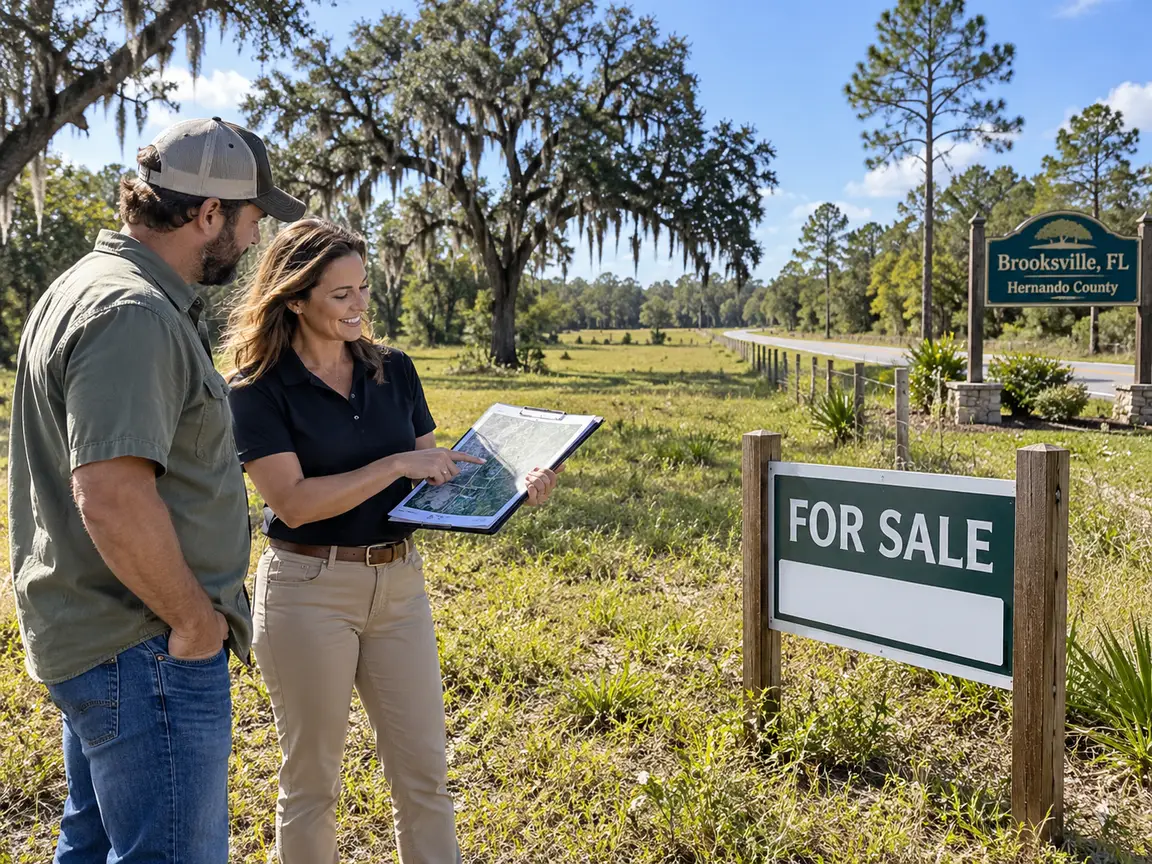
If you own vacant land in Brooksville or elsewhere in Hernando County, you have probably noticed how different selling it is from selling a house. There is no kitchen to stage and no neighborhood of identical homes to compare against. A buyer is looking at access, utilities, soil, flood zones, and what they are legally allowed to build. A local land agent earns their fee by knowing how to answer those questions before the buyer asks.
This guide explains what a land agent does for Hernando County owners, how pricing and marketing work for acreage, and what to sort out before you list.
Why Hernando County land is its own market
Hernando County sits on Florida’s Nature Coast, north of Tampa Bay, with Brooksville as the county seat. Within a short drive you can find small residential lots, wooded acreage, pasture, and larger rural tracts. Each of those draws a different buyer: a family wanting a homesite, a builder looking for lots, someone seeking recreational acreage, or an investor holding for the long term.
That mix is the reason a general-purpose home agent can struggle with land. One parcel’s value depends on things that never come up in a house sale, such as whether a paved road reaches the property, whether power and water are at the lot line, and how the parcel is zoned and classified. Two parcels of the same size, a few miles apart, can be priced very differently.
What a land agent does that a home agent usually does not
A licensed agent who focuses on land typically handles work that falls outside a standard house listing:
- Confirming legal access, easements, and whether the parcel is landlocked or has recorded road access
- Checking zoning, future land use, and any deed restrictions or HOA rules that limit what a buyer can do
- Reviewing flood zone and wetlands information that affects buildability and insurance
- Identifying whether utilities are available or whether a buyer would need a well and septic system
- Marketing to land-specific buyer pools instead of only the general home-buyer audience
None of this is exotic, but each item changes the price and the pool of buyers. If an agent skips them, the buyer’s attorney or lender will not.
Step 1: Understand what you actually own
Before you talk price, gather the basics: your deed, the parcel ID, a recent survey if you have one, and your most recent tax bill. Look at the property record on the county property appraiser’s website to confirm acreage, legal description, and current land-use classification.
If the land is currently classified for agricultural use, talk to your agent and tax professional before you list. A change in use after a sale can affect the property tax bill, and buyers will ask. It is also worth checking for liens, unpaid taxes, or title issues early. Problems with the chain of title are far easier to fix before you have a buyer waiting.
Step 2: Price it the way land is actually priced
Land does not have a tidy comp set, so pricing is a judgment call supported by data. An agent will usually look at recent closed sales of similar parcels nearby, price per acre for comparable size and use, and active listings that show what you will be competing against.
Size matters in a way that surprises owners. Per-acre prices often fall as parcels get larger, and a small lot that is ready to build on can carry a premium per acre. Features like road frontage, cleared and usable acreage, and proximity to town can swing value.
For a quick starting number, use our land valuation tool, then have an agent pressure-test it against the market. Overpricing is the most common mistake. Land that sits can pick up a stale reputation, and price cuts later rarely recover the momentum of a well-priced launch.
Step 3: Prepare the parcel for buyers
You do not need to landscape a lot, but a few inexpensive steps help. Mark the boundaries so buyers can see what they are buying. Clear a path from the road so people can walk the property. Remove dumped debris. If there is a gate, make sure showings do not depend on someone finding the key.
Good photography matters even more with vacant land. Aerial images and a clear boundary map let an out-of-town buyer understand the property without driving out. If you have a recent survey, a well-documented flood zone, or a soil or perc evaluation, include them with the listing.
Step 4: Market to the right buyers
Land buyers search differently from home buyers. Many start on land-specific listing sites and map-based search tools, and they often compare several counties at once. A good listing puts the key facts first: acreage, access, utilities, zoning, flood zone, and any approvals already in place.
An agent who works land regularly also has relationships with local builders, investors, and other brokers who have buyers waiting for the right parcel. That network is often where an off-market conversation starts.
Step 5: Evaluate offers beyond the price
The highest number is not always the best offer. Land contracts commonly include contingencies for due diligence, survey, financing, or rezoning, and each one affects your odds of closing. Compare the buyer’s financing, the length of the inspection period, the deposit, and the closing timeline. If a buyer asks for seller financing, think carefully about terms and get legal advice before agreeing.
If you are weighing a traditional listing against a faster, lower-priced sale, it helps to compare your options side by side, including what you would net after costs.
Step 6: Closing and what comes out of the proceeds
Closing typically happens through a title company or attorney. As the seller, expect to cover the agent’s commission as agreed in your listing agreement, the documentary stamp tax on the deed, prorated property taxes, and the payoff of any mortgage or lien. Customs for who pays for the owner’s title policy vary by county, so confirm this in your contract. Ask your title company for an estimated net sheet early, so you know what to expect.
Common questions from Hernando County landowners
Do I need an agent to sell vacant land? You can sell without one, but you take on pricing, marketing, negotiating, and contract risk yourself. Many owners find the price and speed gained from an experienced land agent more than offset the commission.
How long does land take to sell? It varies widely with price, location, and parcel type. Well-priced, accessible parcels with clear information tend to move faster than ones that need buyers to figure out the basics on their own.
What if my land has a problem, such as unclear access or an old lien? Tell your agent up front. Many issues can be resolved or disclosed appropriately, and surprises discovered during a buyer’s due diligence are what usually kill deals.
Ready to talk about your Hernando County land?
If you own land in Brooksville or anywhere in Hernando County and want a realistic read on value and strategy, contact Scott. You will get a straight conversation about what your parcel is worth, how it should be marketed, and whether listing is the right move.
