
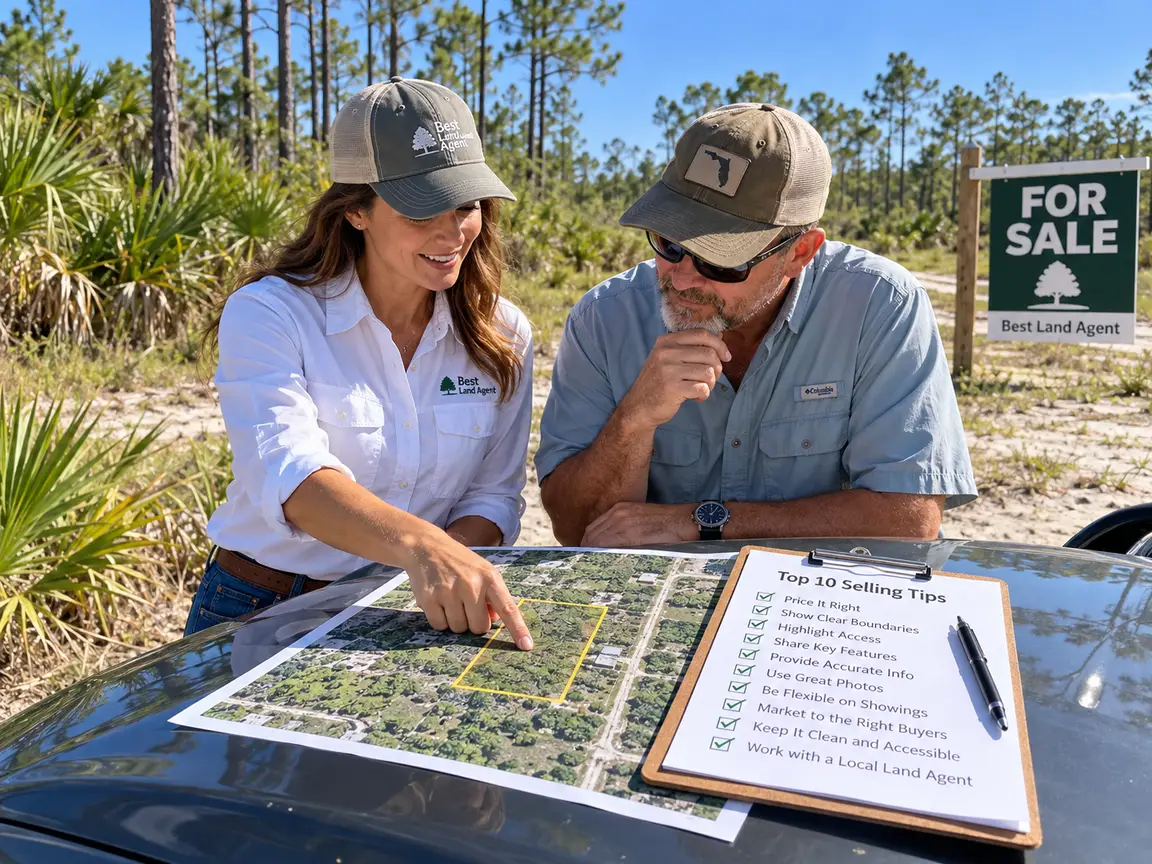
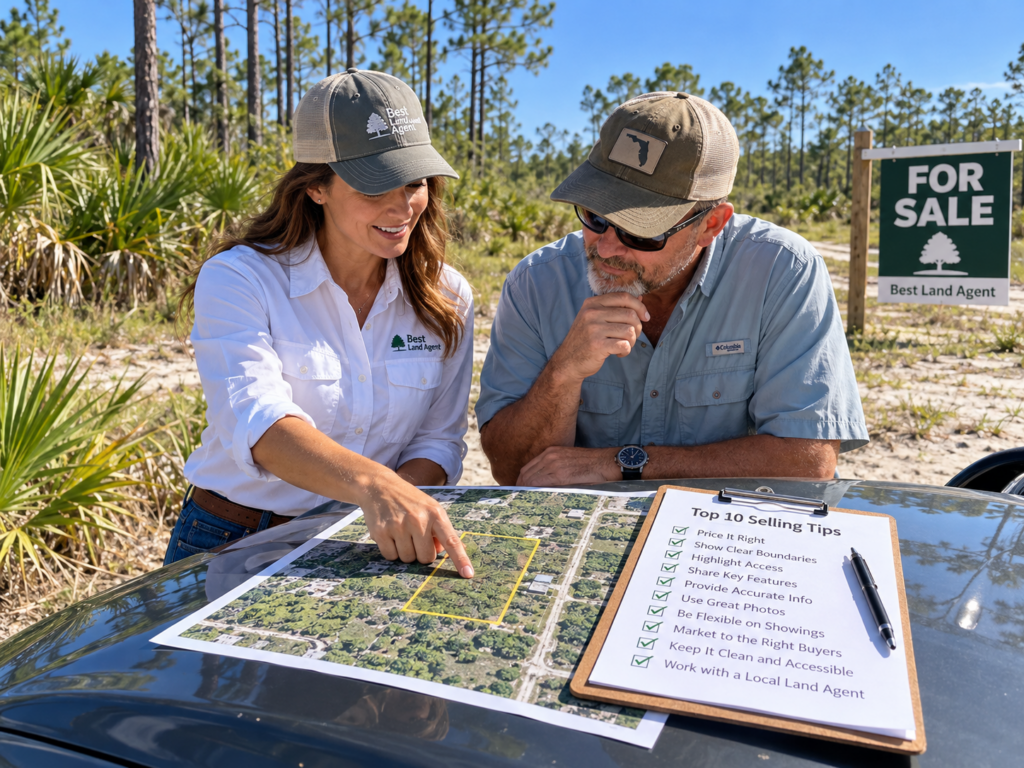
Selling land in Florida is not the same as selling a house. There is no staging, no curb appeal in the usual sense, and buyers are often making decisions based on a survey, a parcel map, and a handful of photos. That makes preparation and positioning matter even more. These ten tips come from the questions landowners ask most often, and they apply whether you own a quarter-acre lot or a larger tract.
1. Start with a realistic price
Overpricing is the most common reason land sits. Buyers and their agents compare your parcel to recent sales and to what else is available, and a number that ignores those comparisons gets skipped, not negotiated. Look at closed sales of similar parcels in your county, not just asking prices, and account for differences in access, utilities, size, and flood zone. Our guide to pricing your land realistically walks through how to do this step by step.
2. Know exactly what you own
Before you list, confirm the parcel number, legal description, acreage, and boundaries. Pull your deed and your most recent tax bill, and check whether a survey exists. Buyers get nervous when basic facts are unclear, and surprises discovered mid-contract are a leading cause of renegotiation or cancellation.
3. Prove legal access
Access is one of the first things serious buyers ask about. Is the parcel on a paved county road, a dirt road, or an easement? Is the road publicly maintained? A property without clear, recorded access can be very difficult to finance or insure, so if there is any question, sort it out early. If access is via easement, have the recorded document ready.
4. Document utilities and building feasibility
Tell buyers what is available at or near the property: electric, water, sewer or septic, and internet. For many parcels, buyers will want to know whether a septic system or well is feasible and what the county requires. You do not need to guess at the answers. Even a clear note such as “power at the road, septic required, no public water” saves time and filters in the right buyers.
5. Be upfront about flood zone and environmental factors
Florida buyers are paying close attention to flood zones, wetlands, and protected habitat, and these can affect where and how a buyer can build. Find your parcel’s flood zone designation and any known wetland areas, and share them in the listing. Honest disclosure up front builds trust and avoids last-minute surprises.
6. Gather your paperwork before you list
Having documents ready makes you look organized and speeds up closing. Typical items include the deed, tax records, any survey, HOA or deed restriction documents if applicable, and details on any liens or mortgages. If you are not sure what you will need, see the documents you will likely encounter when selling land in Florida.
7. Present the property well
Land can be shown well too. Clear the property entrance, remove trash and debris, and make sure the boundaries or corner markers are visible if you can. Good photos, a drone shot or aerial view, and a clear map with the parcel outlined go a long way. Buyers often cannot visit right away, and strong visuals are what get them to schedule a trip. We cover this in more detail in getting your listing ready.
8. Write a listing that answers questions
A good land listing tells buyers what they need in the first few lines: size, location, access, utilities, zoning or land use, flood zone, and any restrictions. Avoid vague promotional phrases and lead with facts. A buyer who finds every answer in your listing is far more likely to call than one who has to dig.
9. Market where land buyers actually look
Land buyers search the MLS, major real estate portals, and land-specific sites, and many work through agents who have buyers waiting for the right parcel. A yard sign alone will not reach most of them. Wide exposure is the main advantage of a traditional listing, which is why it usually produces the strongest price. If you are weighing alternatives such as a cash buyer or auction, it helps to compare your selling options before you decide.
10. Work with someone who knows land
Land has its own rhythms. The right agent understands how to price vacant land, which buyers are active in your county, what due diligence a buyer is likely to run, and how to keep a contract on track through closing. A specialist can also tell you early if something about your parcel, such as a title question or access issue, needs attention before it goes to market. If you are ready to get started, you can list your land with a licensed agent who handles Florida land every day.
Common mistakes to avoid
A few patterns show up again and again. Listing with little information, so buyers cannot tell what they would be getting. Pricing based on what a neighbor hoped to get instead of what similar parcels actually sold for. Ignoring access or flood questions until a buyer’s due diligence finds them. And turning down reasonable offers early, then watching the listing go stale. Time on market affects how buyers perceive a property, so a fair price at the start often beats a high price you have to cut later.
What to expect at closing
Once you have an accepted offer, expect a title search, a buyer inspection period or due diligence window, and then closing. Typical seller costs include the documentary stamp tax on the deed, prorated property taxes, title-related charges depending on your contract and county custom, and any mortgage or lien payoff. Ask for an estimated net sheet at the start so you know what you would actually keep. Rates and fees change, so confirm current figures with your title company.
Ready to talk about your land?
Every parcel is different, and the best strategy depends on your county, your access, and your timeline. If you own land anywhere in Florida and want an honest read on its value and the best way to sell, contact Scott. You will get straight answers about pricing, timing, and whether listing is the right move for you.
